

When you think of cowboys on the silver screen, you might picture wide-brimmed hats, dusty boots, and the sunbaked landscapes of the American West. But for a whole generation of fans, the most unforgettable cowboy stories didn’t come from Hollywood. They came from…Italy. Welcome to the wild world of Spaghetti Westerns, where the myth of the cowboy got a stylish, gritty, and sometimes downright oddball makeover.
What Exactly Is a Spaghetti Western?
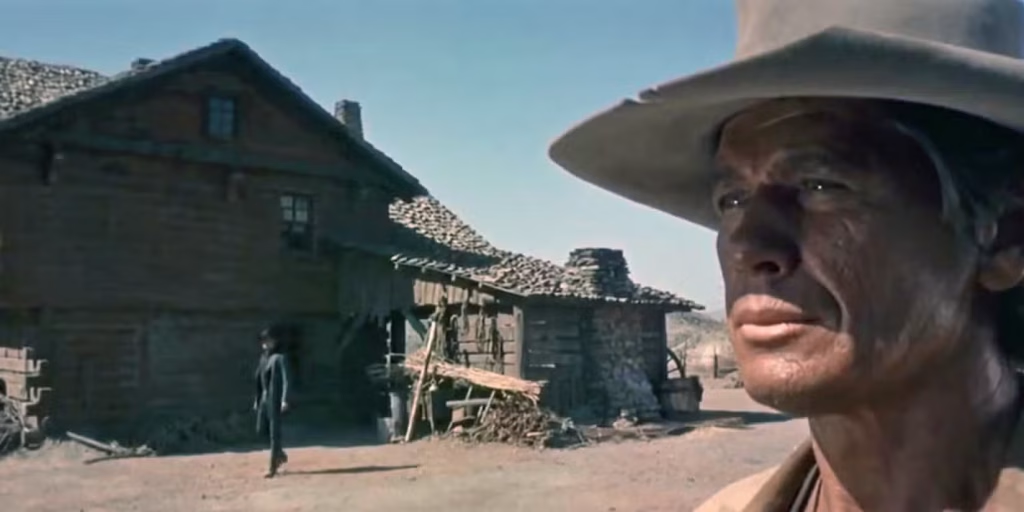
The term “Spaghetti Western” might sound like a punchline. But it’s actually a badge of honor for a whole subgenre of western films made by Italian directors, mainly in the 1960s and 70s. These movies were shot on shoestring budgets, often in the arid Spanish countryside, and featured an international mix of actors. They took the American western formula and cranked up the style, the violence, and the drama.
If classic American westerns were all about clear-cut heroes and noble causes, Spaghetti Westerns were a world of anti-heroes, shifting loyalties, and moral gray areas. The good guys weren’t always that good, and the bad guys? Well, they were usually a lot of fun to watch.
The Birth of a Genre

So how did Italy become the unlikely home of the cowboy? In the early 1960s, American westerns were losing steam. Audiences wanted something new, and Italian filmmakers were more than happy to oblige. Directors like Sergio Leone saw an opportunity to put their own spin on the genre, using bold visuals, haunting music, and characters who were as tough as the landscapes they rode through.
Leone’s 1964 film A Fistful of Dollars, starring a then-unknown Clint Eastwood, kicked off the craze. With its iconic close-ups, dramatic standoffs, and unforgettable score by Ennio Morricone, the movie became a runaway hit—and a new kind of cowboy was born.
What Made Spaghetti Westerns So Different?
For starters, these films weren’t afraid to get their hands dirty. The heroes were often loners with mysterious pasts, more interested in survival than saving the day. The violence was more graphic, the stakes higher, and the lines between good and evil were anything but clear.
Spaghetti Westerns also had a style all their own. Think sweeping landscapes, gritty towns, and a musical score that could make even the quietest moment feel epic. Ennio Morricone’s music—full of haunting whistles, twanging guitars, and pounding drums—became as much a part of the experience as the gunfights and showdowns.
How Spaghetti Westerns Changed the Cowboy Image
Before Spaghetti Westerns, the cowboy was often a clean-cut hero with a strong moral code. After Leone and his peers had their say, the cowboy became something else entirely: a mysterious drifter, a man with no name, a survivor in a world where the rules were constantly changing.

This new take on the cowboy wasn’t just popular in Italy or the U.S.—it caught on around the world. The gritty, stylish anti-hero became a pop culture icon, inspiring everything from comic books to video games to modern westerns like Unforgiven and No Country for Old Men.
Why Spaghetti Westerns Still Matter
Today, Spaghetti Westerns are more than just a quirky footnote in movie history. They’re a testament to how the cowboy myth can be reinvented and reimagined for new generations. They remind us that the West was always a little wilder, a little stranger, and a lot more complicated than we might think.
Plus, let’s be honest—they’re just plain fun. There’s something about those sweeping shots, tense standoffs, and unforgettable soundtracks that keeps folks coming back, decade after decade.
5 Must-Watch Spaghetti Westerns for Every Cowboy Fan
Whether you’re a longtime fan or just getting started, here are five Spaghetti Westerns that capture the spirit, style, and swagger of the genre:
1. The Good, the Bad and the Ugly (1966)
Arguably the most famous Spaghetti Western of all time. Clint Eastwood, Lee Van Cleef, and Eli Wallach square off in a treasure hunt across a war-torn landscape. The final standoff is legendary, and Morricone’s score is unforgettable.
2. A Fistful of Dollars (1964)
The film that started it all. Eastwood’s “Man with No Name” rides into a town torn apart by rival gangs and plays both sides to his own advantage. Gritty, stylish, and endlessly rewatchable.
3. Once Upon a Time in the West (1968)
Sergio Leone’s epic masterpiece features Henry Fonda as a chilling villain, Charles Bronson as a harmonica-playing drifter, and some of the most beautiful cinematography ever put on film.
4. Django (1966)
Starring Franco Nero as a coffin-dragging anti-hero, Django is violent, moody, and packed with unforgettable moments. Its influence can be seen in everything from Quentin Tarantino’s films to modern video games.
5. For a Few Dollars More (1965)
The second film in Leone’s “Dollars Trilogy,” this one ups the ante with a bounty hunter team-up, memorable villains, and more of that iconic Morricone music.
The Lasting Legacy of the Spaghetti Western
Spaghetti Westerns might have started as a European twist on an American tradition. Still, they ended up changing the way we see the cowboy forever. They took the myths of the Old West and gave them a new edge—one that still shapes cowboy stories today, from movies and TV shows to podcasts and blogs like this one.
So next time you hear that unmistakable whistle or see a lone rider silhouetted against a blazing sunset, tip your hat to the Italian filmmakers who helped keep the cowboy legend alive—and maybe queue up a Spaghetti Western for your next movie night. —☆

